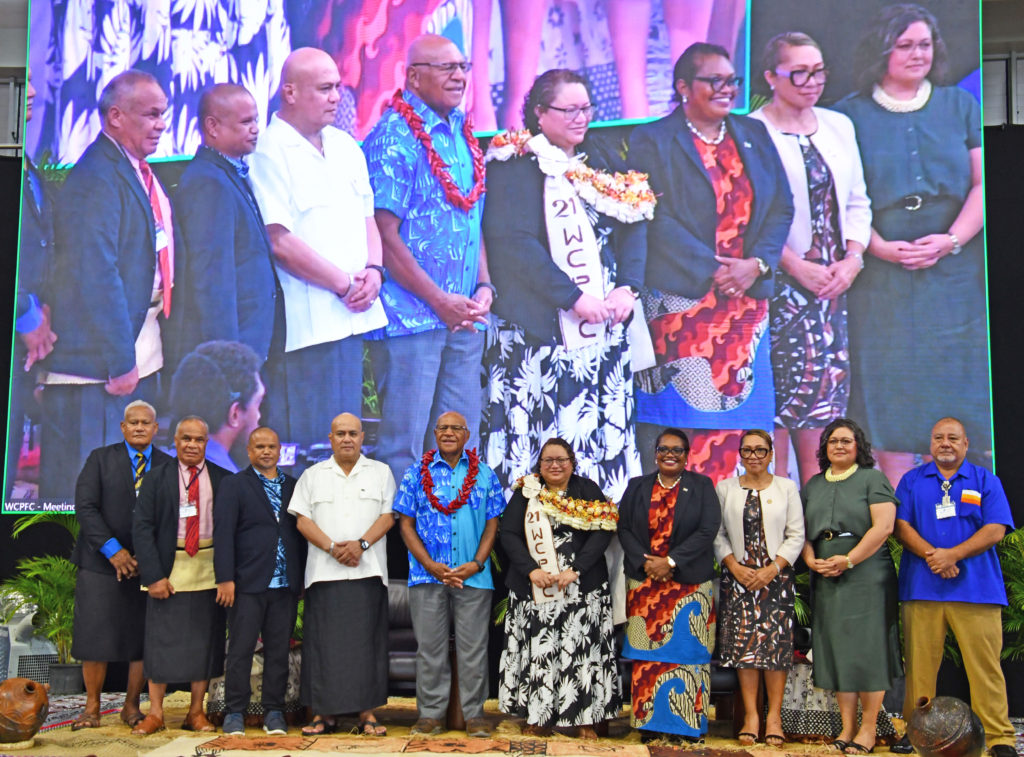




An important six-day annual gathering of fishing nations and stakeholders is currently underway at Suva’s Vodafone Arena with a shared commitment to the sustainable utilisation and management of the Pacific’s invaluable tuna resources.
The 21st regular session of the Western and Central Pacific Fisheries Commission brings together 550 participants from around the globe to discuss the region’s tuna stocks and their sustainable development.
Prime Minister Hon. Sitiveni Rabuka officiated the event, emphasising the profound connection between the Pacific Ocean and the livelihoods, cultures, and economies of Pacific Island nations.
“The Pacific Ocean is home to the most productive tuna fisheries in the world, and it is our shared responsibility to ensure that these resources are managed wisely and equitably for the benefit of both current and future generations,” PM Rabuka asserted.
“For this, it is imperative that I emphasise the critical importance of a science-based and data driven decision-making process.
“Informed decisions are critical in the management of our natural resources especially, for one resource, tuna fisheries, that is transboundary, vulnerable to climatic weather conditions and lives in an environment that is used as a dumping ground of waste.”
Further, the PM added that it is essential to engage with our scientists, fisheries experts, and local communities to ensure that our policies reflect a holistic understanding of the marine environment.
He stated that our decisions must reflect our commitment to the long-term health of our oceans and the livelihoods of the people who depend on them.
“Let us seize this moment to reaffirm our dedication to cooperation, transparency, and accountability in our decision-making processes,” remarked the PM.
“We must also recognise the importance of partnerships. Our collective strength lies in our ability to work together, sharing knowledge, resources, and best practices.
“Together, we can forge innovative solutions to overcome the challenges we face, ensuring the sustainability and resilience of our tuna fisheries across their migration pathways, for present generations and those to come.
“Let us commit to making decisions that not only protect our tuna stocks, but also safeguard the livelihoods and cultures of our people,” he concluded.
The Western and Central Pacific Fisheries Commission was established by the Convention for the Conservation and Management of Highly Migratory Fish Stocks in the Western and Central Pacific Ocean which entered into force on 19 June 2004.
The WCPF Convention seeks to address problems in the management of high seas fisheries such as unregulated fishing, over-capitalisation and excessive fleet capacity.